The Books I Read In 2025
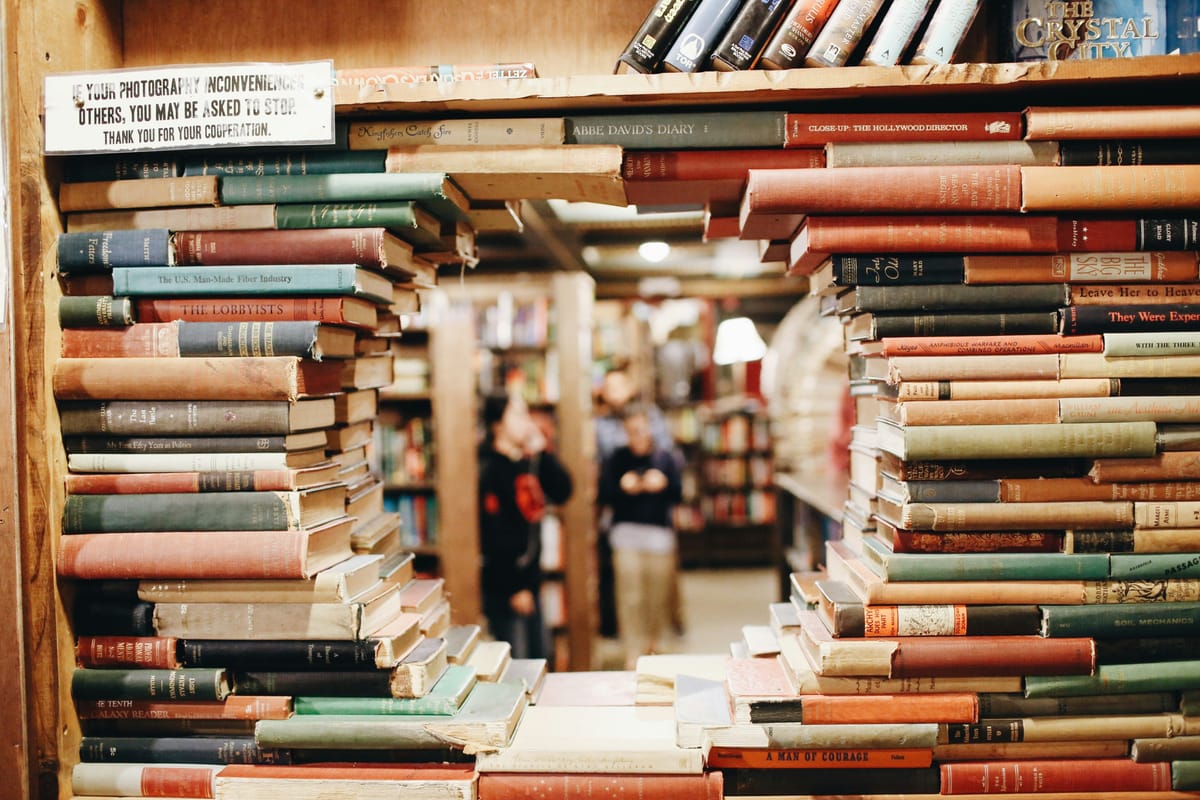
2025 wasn't a stellar year for reading, but I did read stuff! As usual, there were too many re-reads, but some very pleasing new (to me) stuff as well. Though I quit tracking my reading in 2023 and 2024, I gave it another try by trying to remember what I'd read in 2025. I guess 40 books in a year isn't a bad number, but I think I can do better.
Since I can't remember the order I read things in, this list will be by author, starting with entirely new books, followed by mixed old and new, and finally authors who are only re-reads.
James S.A. Corey
- Leviathan Wakes
- Caliban’s War
- Abaddon’s Gate
After years of avoiding it, I dove in to James S.A. Corey's The Expanse series late in the year. As often happens, I instantly regretted having waited so long! I made it through the first three books, Leviathan Wakes, Caliban’s War and Abaddon’s Gate before year's end (and between other books). I've never been a particular fan of space opera, but I don't dislike it either, and these first three Expanse books have me looking forward to the next six.
Richard Helmling
- Athena Emergent
- Athena Penumbral
Richard Helmling and I started corresponding as I prepared to self-publish my own novel. His Athena Emergent and Athena Penumbral are stories of an engaging artificial person. I admit I like the first a little better than the second, primarily because Athena wasn't "on screen" as much in the second book. Still, Richard has created a compelling world, and I hope he continues the series.
Len Deighton
- The Ipcress File
I'm unsure about reading more Len Deighton after trying his first book, The Ipcress File, but we'll see as 2026 rolls along. He has a large catalog to choose from, and first books aren't always the best examples of an author with a long and successful career. What led me to read Deighton in the first place is his book Bomber, so I'm sure I'll at least get to that in the future.
George Penney & Tony Johnson
- OverLondon
Okay, I must go on record as saying I am not a Terry Pratchett fan, which I know is heretical, but there it is. But OverLondon is a book in the Pratchettian style, and I enjoyed it very much. The authors are a wife and husband team living in New Zealand. I discovered them via George's daily observations of daily goings-on in their little city, posted on Mastodon, and found them so charming I had to give the book a try. I'll be looking forward to the sequel.
Agatha Christie
- The Mysterious Affair at Styles
I enjoy espionage and crime novels now and again, but I'd never read Agatha Christie, and when a friend started exploring her biography, I decided to give her a try. The Mysterious Affair at Styles was all right, but I'm not sure when or if I'll pick her up again.
Timothy Zahn
- Heir To The Empire
- Dark Force Rising
- The Last Command
I'm not big on tie-in fiction. I don’t object to fan fiction, and no real problem with creators licensing their property to extend the worlds they've created; I just tend to prefer the original. This is why it took me thirty-five years or so to read the books that helped keep Star Wars alive between The Return Of The Jedi and the Special Editions. I won't say these are groundbreaking works of science fiction, but I think Zahn did a good job of capturing the characters and coming up with fresh adventures for them. Grand Admiral Thrawn is such a good villain, I was glad to see Disney decide to put him into the otherwise ho-hum Ahsoka series.
Carl Hiaasen
- Fever Beach
- Squeeze Me
It's been years since I read anything by Carl Hiaasen, and I was delighted to pick up his latest, Fever Beach, and follow it with the previous book, Squeeze Me. I last read Hiaasen before I had an e-reader, so I have no idea anymore what I have and haven't read. But with his mix of humor and crime in Florida, and the hapless protagonists who take on the bumbling villains, I find him hard to resist. I'll no doubt dive into Hiaasen again as time goes on.
Mick Herron
- Clown Town
- Down Cemetery Road
Some authors I like so much I will throw my money at them, and Mick Herron is one. The latest Slow Horses book, Clown Town, I pre-ordered and dropped everything else to read as soon as it downloaded to my Kobo. The mixture of spycraft and humor is irresistible. I'm happy to say I discovered Slow Horses even before the excellent Apple TV series started, and I'm pleased that the TV show is a complement to the books.
I'm certain I read Down Cemetery Road while I was first devouring the Slow Horses books, but I felt compelled to read it again after watching the Apple TV series. Despite the excellent performances by Emma Thompson and Ruth Wilson, I found the series' writing pretty awful. I was surprised at how closely it hewed to the book, and how slow the book was. And though it's one of Herron's Zoe Boehm thrillers, how little Zoe was in it! The problems with the show were entirely different than the problems with the novel, however. The novel may have been slow, but the choices and events all made sense.
Luke Jennings
- Code Name Villanelle
- No Tomorrow
- Die For Me
- Killing Eve: Resurrection
- Killing Eve: Long Shot
Another writer who gets my money without question is Luke Jennings, who continued the Code Name Villanelle/Killing Eve series with Killing Eve: Longshot, a thriller set in the English horse racing world. This is another set of books I discovered before their television adaptations appeared, and another adaptation that turned out well (though Sandra Oh looks nothing at all like the Eve Polastri Jennings describes). I reread the series early in 2025, around the time Jennings was serializing Resurrection on Substack, and pre-ordered Long Shot as soon as I could. Another Villanelle book is coming out this spring, so there's something to look forward to.
Chuck Wendig
- Wanderers
- Wayward
I think I'm a bit odd when it comes to series. I prefer them to be complete before I start reading (so I'll probably never read George R.R. Martin's magnum opus). But if I do start reading early, I usually re-read earlier installments when the new one shows up. Sometimes, though, I have no idea a book will be a series, so I read the first book innocent of any knowledge there's more to come. Such was the case with Chuck Wendig's Wanderers, which I re-read before picking up its sequel, Wayward. I've liked every Wendig novel I've ever read, and these two were no exception. They bring to mind The Stand, the only Stephen King novel I like, but they're stories built for the 21st century.
Robert Ludlum
- The Bourne Identity
Coming into the authors who are all re-reads for 2025, I'll note that I've enjoyed Matt Damon in the Bourne Identity movies several times over the last few years, but hadn't read the originals since the early 1980s, when I was couch-surfing with friends while preparing to get married. The overall story was still okay, but there was a lot of stuff that didn't age well, as we say today. The movies did a much better job of bringing Bourne and Marie together than Ludlum did, or at least more acceptably to modern audiences. Of course, Ludlum was a product of his time, but he's one author I don't intend to return to.
William Gibson
- Pattern Recognition
- Spook Country
- Zero History
If asked who my favorite author is, I will say "William Gibson" before the asker finishes asking. It's not unusual for me to read through his entire oeuvre every couple of years at least. This last year I just read the Blue Ant trilogy (sometimes called the Bigend trilogy), of which the first, Pattern Recognition, is my favorite Gibson book. It is the least science fictional of all his work, being set in the real world post-9/11, but it's his science fiction background that makes the real world so compelling. Gibson is an incomparable writer.
Martha Wells
- All Systems Red
- Artificial Condition
- Rogue Protocol
- Exit Strategy
- Network Effect
- Fugitive Telemetry
I simply had to read the Murderbot books for the third time before the premiere of Apple TV's excellent adaptation of the first book, and it was as delightful as ever. If you haven't read Murderbot yet, get with it!
Isaac Asimov
- Foundation
I'm pretty sure it’s been 40 years since I last read the Foundation trilogy, maybe longer. I liked it back then, but now I see it's really just a lot of guys talking (and they’re always guys). The story and situation are compelling, but the action is lacking. I might finish the original trilogy.
Suzanne Collins
- The Hunger Games
- Catching Fire
- Mockingjay
I'm really not sure why I picked up the Hunger Games trilogy, except that this last year looked more and more like the United States was going down that road. They were as good the second time around as the first. I kept having to remind myself these are young adult or even late juvenile books, they're so raw in places.
John Varley
- Titan
John Varley died in 2025, and it made me want to read his greatest novel series, The Gaea trilogy, over again for the first time in 15 or 20 years. As with most series, I read a book, go read another book (often in another series!) and come back to the first series later, so Wizard and Gaea will be books for 2026. These books were revolutionary, at least to me, when they came out in the late 1970s and early 1980s, just before the advent of William Gibson, and cemented in me certain preferences for science fiction I think have made their way into my own work.
George Dyson
- Project Orion: The Atomic Spaceship, 1957-1965
When I read nonfiction, I reach for history first. Dyson's book was a piece of primary research when writing my novel, The Immortal Remains, but it had been out of print for years. It was finally republished last year, and I read it eagerly, though I'd almost memorized a library copy several years ago.
Jimmy Maher
- The Sistine Chapel
Jimmy Maher is an amateur historian. I discovered his blog, The Digital Antiquarian, a number of years ago. An in-depth history of computer gaming, it appealed to the retro-computer nerd in me, even though I have never been much of a gamer. He started turning to real-world history a few years ago, publishing books built from his blog entries. The Sistine Chapel was the first of these I read as a book. I enjoy his writing very much despite his lack of credentials, so I'll keep reading.
Tiago Forte
- The PARA Method
Like many other nerds, I've flirted with the idea of "the second brain" and formal note-taking frameworks. Ultimately, few of them work out for me, and Forte's methods don't either. Now that I'm retired, I don't need the degree of organization I desired when I was working; I'm still looking at organizational methods, but I'm much more relaxed about it.
The new year finds me almost exactly in the middle of another re-read, Alix E. Harrow's The Ten Thousand Doors of January, so I'll pick up with that one in 2026!