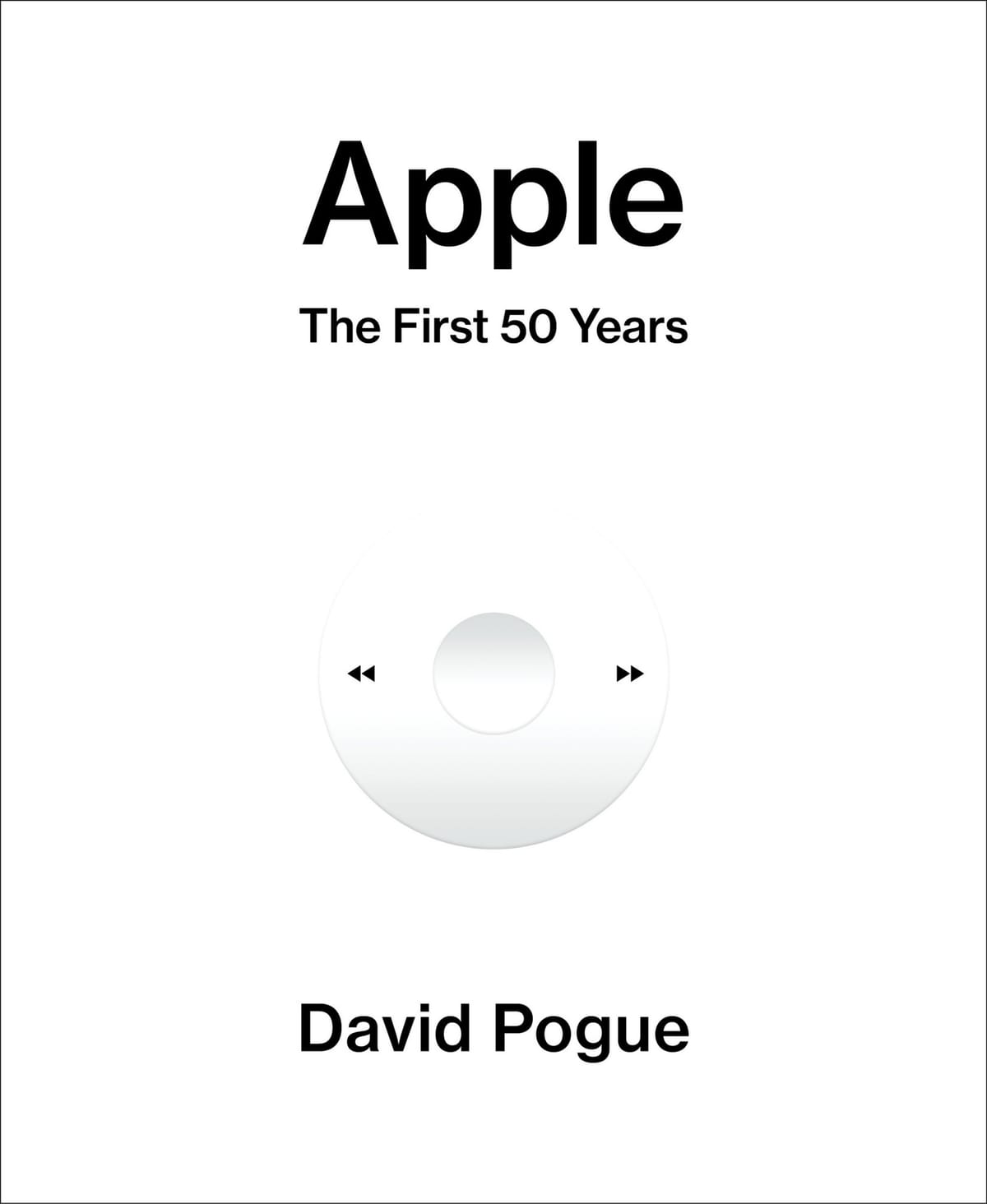
The Seventh Book of 2026: Apple: The First 50 Years, by David Pogue
Started March 12, 2026
Finished March 20, 2026
I got this book as soon as I learned it was available, and devoured it. Devouring took me a few days. It’s big.
I’ve been an Apple user, on and off, for over 25 years. I’ve gone back and forth between Apple laptops and Windows (driven by economics more than anything), accreting iPods, iPads, iPhones, and MacBooks.
So Apple has fascinated me for decades, along with the rest of the history of small computers. David Pogue’s new book, _Apple: The First 50 Years _was a natural buy for me. Pogue’s writing is straightforward and informal. The book flows in chronological order with hints at the future and callbacks to the past. It includes mini-profiles of many of the people prominent in Apple history and a lot of color photos scattered through the text (though, since I read it on my Kobo, they were all black and white and tiny).
As a tech journalist, Pogue has written a lot about Apple over the years, but I don’t feel he comes across as an “Apple fanboi.” He calls out the mistakes and shortcomings in the company’s history as well as the many triumphs. Apple opened their archives and helped put him in touch with a lot of current and former employees, but had no say in the final result (at least not directly).
Some of the best parts of the book aren’t the stories any Apple fan (or serious follower of microcomputer tech) already knows. Instead, the greatest delights are the looks behind the scenes, the products that never got produced, and the actual stories of some that did.
Two of my favorite stories are of early products. Pogue tells us that Steve Jobs hated fans. So the Apple III had no fans and overheated, and sometimes diskettes in the machine melted. Overheating also caused chips to come unseated from their housings, causing the machines to crash. The standard solution, the one that Apple support gave the customers, was to lift the machine two or three inches off the desk and drop it. It was fine…there were no moving parts (like spinning hard drives) that could be harmed by this, and it reseated the chips. Problem solved, every time. I’d heard this story for years, but Pogue hadn’t, and says he didn’t believe it at first.
The other story was of the original Macintosh, which had a paltry 128KB of RAM…hardly enough for the system software, an application such as the MacWrite word processor, and a few pages of text. Jobs was adamant that the machine would never have more memory, but the engineers sadded the circuitry for future memory expansion without telling him. A similar thing happened with the iPhone App Store, something Jobs opposed at first; software engineers created the basics of the store in secret, making development quick when Jobs at last saw the logic of it.
The book devotes a lot of words to the importance of design in the second Steve Jobs era, starting in 1996. Combining aesthetic beauty and practicality in Apple products has contributed to Apple’s success in the 21st century as much any of its other innovations, which leads the world more than many of us realize (or want to admit).
Apple: The First 50 Years was a most enjoyable read, and I’m happy to have it on my computer history shelf.