The Eighteenth Book Of 2026: I Cannot Tell A Lie, Exactly, by Mary Ladd Gavell
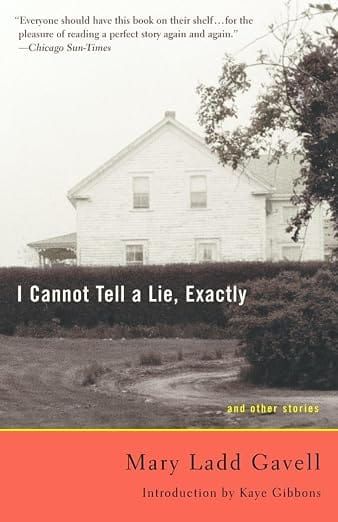
Read 5/31/26 - 6/14/26
I haven't had much interest in short stories, but I'm trying to change that as I work to increase the number of stories I read at one time. The latest part of that effort was Mary Ladd Gavell's collection I Cannot Tell A Lie, Exactly.
Though a woman of some accomplishment (she was editor of the journal Psychiatry from 1955 until 1967), her fiction was unpublished until after her untimely death at age 47. It was her story The Rotifer, published in Psychiatry, that brought her fiction to the attention of the world, and it was published in John Updike's anthology The Best American Short Stories Of 1968, and in his collection The Best American Short Stories Of The Century.
Despite her husband's efforts to get her other short fiction published, it wasn't until 2001 that her collection I Cannot Tell A Lie, Exactly and Other Stories was published.
Besides her work as an editor, Mary was a wife and mom living in Texas, and her stories reflect that time and place. Most of the work in this anthology is delightful and perceptive. A few stories are a bit tedious, but overall I can see why several publishers wanted to put it in print, though various things stood in the way of that for many years. I don't remember exactly how I learned about the book, only that something led me to a 2001 article from the Austin Chronicle.
Though most of her stories weren't published until after the turn of the century, Mary wrote in the heart of the richest era of American short fiction. There were echoes here of John Cheever, the only other short story writer I read extensively, back in my high school or college days (as I said, I've never been much of a short story reader).