The Thirty-Fifth Book of 2026: All Tomorrow's Parties, by William Gibson
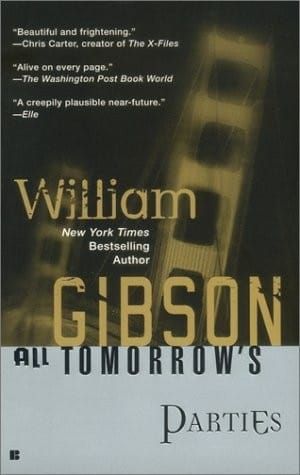
Started 10/14/26, finished 10/17/26
All Tomorrow's Parties, the final book of William Gibson's Bridge trilogy, is possibly his most complex work up to the time it was published, in 1999, with at least eight different point-of-view characters (I might be forgetting one or two). Cramming so many POVs into a single not-too-long novel risks losing the reader, but Gibson handles it well.
But it does make the book a bit more difficult to analyze, especially in the short, simple form I like to use here. Don't worry, I'm not going to leap off into the deep end. Let's just say it's a novel that starts (literally) from all points of the compass and brings everything home, and all in a neat package that doesn't take forever to read. That's all a reader can ask for, I think.
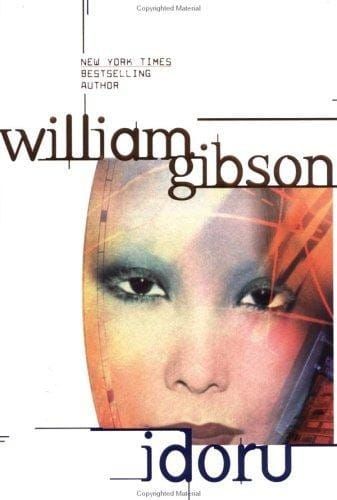
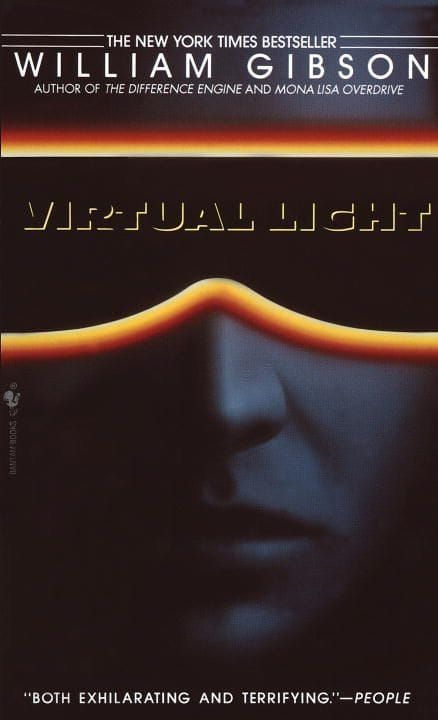
Unlike the Sprawl trilogy, this one ends up visiting almost all the major characters from the first two books (leaving out only Chia from Idoru). Chevette Washington, Berry Rydell, Laney, and Yamazaki all return, as does Fontaine, a minor player in Virtual Light. Gibson also introduces an assassin we come to know as Konrad and two different street characters, Silencio and Boomzilla.
As always, these point-of-view (POV) characters are important because Gibson writes from a close third-person POV, and the reader only sees and knows what the character knows. A complex story like All Tomorrow's Parties works because we see it from multiple points of view. Gibson leaves it up to us to piece together what is going on.
The crux of the story is the disappearance of Rei Toie, the virtual singer from Idoru. When we left that story, she and the singer Rez were trying to form a kind of marriage of the physical world and incorporeal world of data. That union that failed.
Laney, the quantitative analyst, is finally infected by the stalker syndrome that doomed all his fellow recipients of the S-5B drug trials took part in when he was young. The target of his obsession is Cody Harwood, a public relations magnate around whom Laney sees a gathering change, a nodal point in the book's terminology, that will have a negative affect on the whole world.
But to have a chance of stopping the change, Laney must find Rei and bring her to the source of the gathering change: San Francisco. To this end, he recruits Rydell, currently working security at a Luck Dragon convenience store in Los Angeles. Lucky Dragon is a kind of super 7-11 with locations world-wide, providing most anything a person might need, from large soft drinks to postal services and -- well, let's leave that to a little later.
Given the number of POV characters, the plot is convoluted, though worked out for the most part clearly. Chevette, whose relationship with Rydell begun in Idoru also didn't work out, flees from Los Angeles to San Francisco to escape an abusive boyfriend. Returning to the derelict San Francisco-Oakland Bay Bridge (known in these stories as "the Bridge"), she finds her months away have changed things almost beyond recognition. Various forces, including those being monitored by Rydell from a cardboard box in Tokyo, are at work to integrate the anarchic Bridge community more closely to the cities at either end.
As always, the various characters make their way to a single point, either physically or virtually. Rydell has the projector that is home to Rei, and as Harwood tries to destroy the Bridge in an effort to bring about the vague but menacing change in the world, she escapes into the worldwide network. Amidst all this, Rydell and Chevette rekindle their relationship, Harwood's plans are foiled, and the Bridge, though damaged, is saved.
As many critics have pointed out, the Bridge trilogy is Gibson's deliberate step away from the futuristic cyberpunk word of the Sprawl books, coming closer to a time and place just a little beyond the 1990s. Then, the technologies of the future were virtual reality, nanotechnology and the then-new online world. Rei Toei is Gibson's way of showing what he imagined as the separate world of cyberspace everting itself, growing out into the world. Though he says he never sets out to predict the future, it's apparent that, writing from almost 30 years ago, Gibson was able to see that the infant online world would become the all-encompassing thing it is today.
The virtual star Rei Toei is a bridge between the world of data and the physical realm. When she inserts herself into the world-spanning network, it's not to inhabit it, like the union of the AIs in the Sprawl trilogy. Instead, she uses the newly-installed nanotech duplication stations at Lucky Dragon stores worldwide to create hundreds or thousands of physical copies of herself. All those idorus escaping into the world is, to me, the most lasting -- and haunting -- image in the story. I wish Gibson had created a fourth Bridge book to explore the changes her presences make in the world.
I think All Tomorrow's Parties almost got out of the author's control. There are questions left unanswered (what was the world-change Laney saw? What are all those Rei Toeis going to do, and how will their experiences change them?) and characters whose fate is uncertain (Laney, Harwood, and Rei, of course).
Gibson says he doesn't deliberately set out to create trilogies any more than he sets out to predict the future. He writes from the atmosphere of the times, and the characters and locations seem to drag him after them, demanding that what started as a standalone story grow to the shape it desires, no matter what the author wants.
Especially when reading the books one after the other we see the author himself growing. The fixation on classic timepieces central to the climax of this story is a harbinger of the greater specificity of brands and objects at the center of his next novel. I love Gibson's attention to specifics and details, as the reader will see when I review the next set of Gibson's books.