The Thirty-First Book Of 2026: Mona Lisa Overdrive, by William Gibson
Started 9/24/26 Finished 9/25/26
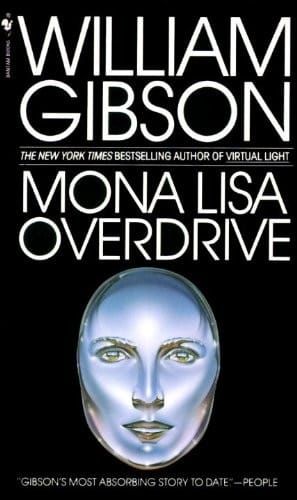
Here at the end of what is commonly called "The Sprawl Trilogy," author William Gibson wraps up the story he began in Neuromancer, giving us both closure on characters and answers to questions posed in the earlier books...while stirring new, unanswered questions. Gibson's solo books are all trilogies, though the latest one remains unfinished. I'm not sure they're all wrapped up as neatly as this one, though.
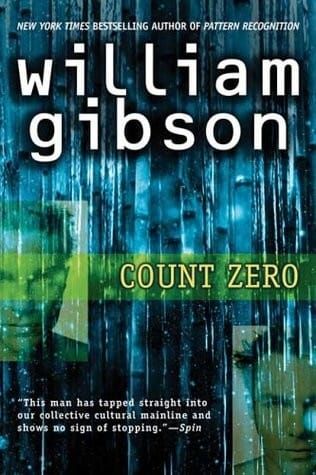
As he expanded his authorial abilities in Count Zero by writing three story threads, Mona Lisa Overdrive adds a fourth. At the same time, he works to expand the language describing the changes cyberspace has gone through in the fourteen years that have passed since the events at the climax of Neuromancer.
I don't believe his presentation of the loa, the Vodou deities introduced in Count Zero, is as clear as it could be. They're muddied and confusing in this book. That doesn't hurt the story, though. Overall, Mona Lisa Overdrive is a bravura conclusion to the trilogy.
Almost by definition, cyberpunk fiction shows a world where corporate organizations, whether commercial or criminal, are more powerful than governments. In Mona Lisa Overdrive Gibson gives us a glimpse inside one of these organizations, Sense/Net, the dominant source of entertainment worldwide. We see it through the eyes of its star performer, Angie Turner, the young girl introduced seven years prior in Count Zero. Thanks to modifications to her brain made by her father, a pioneer in the development of biochips, she has a direct connection to the cyberspace matrix and the loa who live there. This thread is clearly anti-corporate.
Even while we see into the heart of Sense/Net through Angie's eyes, we get an outside view of the machinations of a world-wide criminal organization (another cyberpunk trope) through the eyes of Kumiko Yanaka, daughter of a Japanese crime lord. Kumiko is sent to London for protection during a gang war and meets Molly, the street samurai introduced in the first book. Molly (who initially goes by the name Sally Shears in this story) is one of Gibson's most memorable creations, an outwardly amoral mercenary who's compelled to find ways to do the right things for her associates even as she works toward her own ends.
Through Kumiko's innocent eyes we learn about the criminal warfare her father and her host are engaged in, and as she follows Molly/Sally through London and the Sprawl, a great deal of what has happened to characters and entities introduced in the first book.
The other threads of the story are told through the eyes of the titular Mona, a hooker, drug addict, and most innocent of all Gibson's characters, and Slick Henry, a former car thief who exorcises his demons by building machines that most robot wars engineers only dream of.
Characters are Gibson's greatest strength as a writer, and his handling of each one's point of view has been the key to his success from the beginning of his career. Even when this complicated story brings all four of these characters together, the events and players remain sharp.
Still, I think Count Zero remains the best novel of the three. If anything, Mona Lisa Overdrive tries to do too much. It's a good thing it mostly succeeds.
In my memory of previous readings of Gibson's work, the Sprawl trilogy has the most comprehensive wrap-up of all his series. Every important character gets at least a mention; no major story thread is left hanging. We'll see if my memory is accurate!
AI Free: If I didn’t write this, why should I assume you want to read it? This post was entirely written by me, a human. No content was generated by AI, though grammar and spell checking may have been assisted by AI tools.