The Thirty-ninth Book of 2026: Turing's Cathedral, by George Dyson
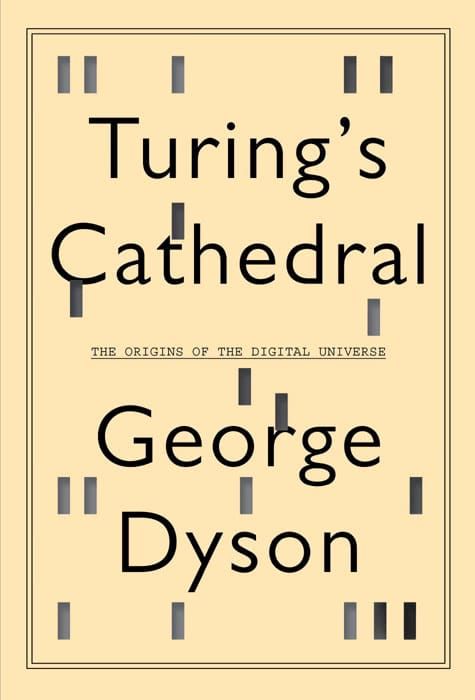
Started 10/25/26, finished 11/5/26
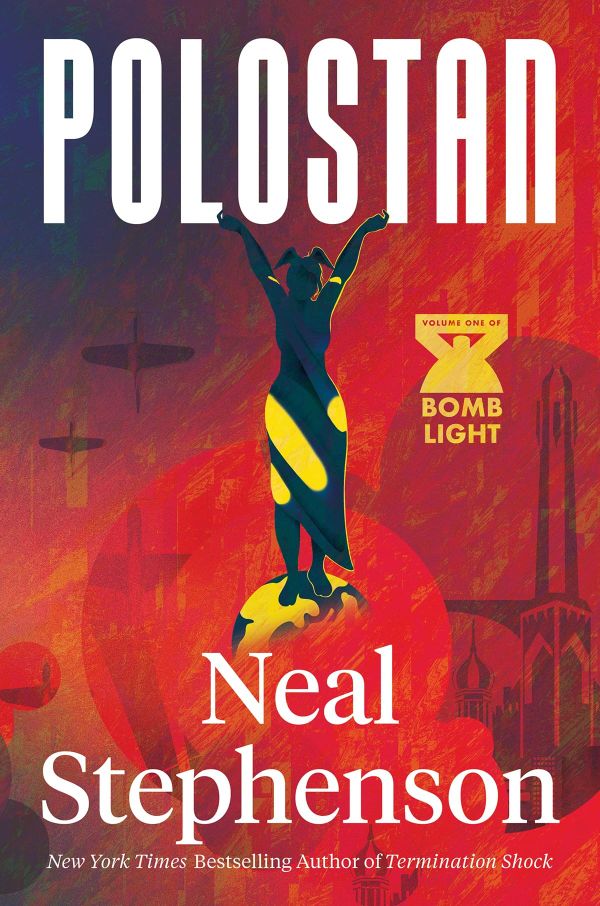
Like Polostan, Turning's Cathedral has been sitting in my to-be-read pile for quite a while. Author George Dyson also penned Project Orion: The Atomic Spaceship 1957-1965, a key resource for my novel The Immortal Remains.
Turing's Cathedral is an eccentric history of the origins of electronic computing. Unlike microcomputing histories like Steven Levy's Hackers or Swaine and Freiberger's Fire In The Valley, it looks at the people and circumstances that led to the original electronic computers like the ENIAC and MANIAC machines, developed as World War 2 wound down and the Cold War ramped up.
The book is highly biographical. Dyson explores the lives of people like John von Neumann, Stanislaw Ulam, Alan Turing, and other physicists, mathematicians, and engineers who helped shape today's world. But it starts as a history of the Institute for Advanced Studies (IAS), the research institute founded in the late 1920s and based in Princeton, New Jersey.
The IAS was set up as a haven for pure research before becoming a refuge for mathematicians and scientists fleeing the rise of Nazi Germany in the 1930s. Dyson tells of the gradual shift from pure research at the institute to sharing its mission with engineering as the 1930s and 1940s wore on.
Before the advent of electronic computers, "computers" were human beings with adding machines, rooms full of people (many of them women) calculating by hand. Their stories have been told in books like Hidden Figures. This books tells part of the story of how electronic computers sped up the work, how machines starting with ENIAC sped up the production of firing tables, which told artillery gunners how an artillery piece be aimed and elevated, how much powder used to hit a certain spot, etc. Compiling these tables took weeks by hand, minutes by electronic computer.
Calculating these tables was the initial aim of the Electronic Numerical Integrator and Computer, ENIAC, which went into operation in 1945. ENIAC was the first machine to bring together all the components we associate with computers today: input and output of data, using numbers as both data and instructions, and storage of programs and data.
But ENIAC ended up being used for more consequential work than calculating artillery tables. Though the math needed for creating the atomic bombs dropped on Hiroshima and Nagasaki was done by hand, the creation of the hydrogen bomb required even more math, and ENIAC was put to work almost at once on those calculations.
One of the strengths of Turing's Cathedral is Dyson's emphasis on how the development of thermonuclear weapons and electronic computers are tightly tied together. Wars result in technological advancement, and that seems to be especially true of the Second World War. John von Neumann, the Hungarian mathematician/physicist who seems to have been involved in most of the the scientific advances of the 1930s and 1940s, was deep into both the development of atomic weapons and electronic computers. Despites the title, his story is at the center of Dyson's book. Though the computers he helped develop were huge and expensive, the concepts behind those machines and todays haven't changed.
Dyson comes rather late to discussing the subject of the book's title: Alan Turing, the British scientist who in the mid-1930s established the model for computing, the Turing Machine.
The Turing Machine is more of a thought experiment than a real machine (though limited, physical versions of the device Turing described have been built), and it modeled how the digital computers we have today a decade before the first of those computers was built. Once Turing set out his ideas, all it took was time, money and the genius of other scientists and engineers to make first one device based on them, then two, then dozens and millions.
As well as exploring the development of the hydrogen bomb and of digital computing itself, Dyson's book talks of the origins of computer-based weather forecasting and applications of computers to bilogy. He also traces the downfall of computing at the IAS after von Neumann left to join the Atomic Energy Commission in 1955.
Turing's Cathedral is an uneven but fascinating look at how people and events in the first half of the 20th century led directly to the technological world of today. Along with the stories of advances he tells the stories of choices made, how technology was shaped and aimed, and of how the people involved debated the morality and necessity of those choices.
In the end, the scientific minds of that time were people much like us who ate and drank, loved parties and each other, who had arguments and mental health problems and eventually died, leaving building blocks for those who came after to erect a different world.