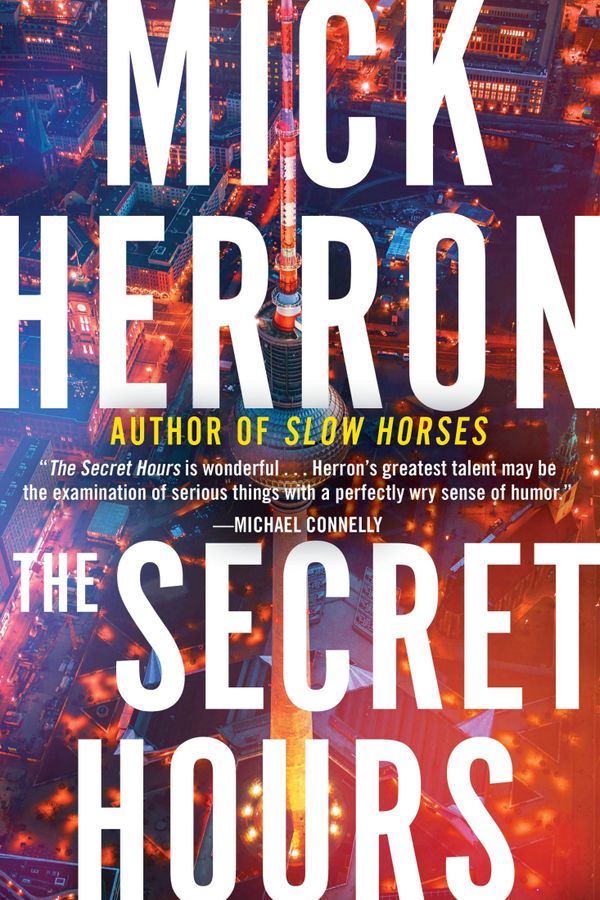
The Thirty-Sixth and Thirty-Seventh Books of 2026: Joe Country and Slough House, by Mick Herron
Joe Country started 9/12/26, Finished 9/14/26. Slough House, started 9/15/26, finished 9/16/26
I'm combining these books into one review, since it seems a little silly to be releasing two reviews one immediately after the other. I held onto theses reviews until the conclusion of the sixth season of Apple TV's Slow Horses series. With a new showrunner, this sixth season was an adaptation of these two books, and I wanted to see how they handled it. See the end of this entry for my thoughts on the TV adaptation.
Joe Country
Most of the titles of Slough House books are based on author Mick Herron's spy universe slang. Slow Horses is, of course, the term for the the denizens of Slough House itself, the place where disgraced MI5 agents go to...well, too often, die. Dead Lions refers to deceased agents, and Real Tigers refers to a "tiger team" of people put together to test security -- a "red team" in security-speak. The spooks on Spook Street, of course, are the spies themselves, a term used when spies refer to other spies.
Finally, London Rules, the book prior to the one being reviewed here, refers to an informal, overall operating principal: when operating under London Rules, your primary concern is covering your own ass. (The companion term, "Moscow Rules," says your primary concern is watching your back, an altogether different concern.)
But "joe" is a more intimate term than "spook." All spooks have handlers, a person above them in the hierarchy, and the person being handled by a more senior spy is their joe. "Joe country" is the place where joes operate, whether it be Berlin during the Cold War or Wales during a snowstorm, as in this story. Protecting their joes is a primary concern for a handler, and though Slough House boss Jackson Lamb is openly contemptuous of the slow horses assigned to him, they're still his joes and messing with them is a sure way to earn his animosity.
Families complicate things, of course, and family connections become a concern when deceased slow horse Min Harper's ex-wife contacts Louisa Guy for help finding her 17-year old son Lucas. Louisa and Min were involved when Min died, and she feels compelled to help.
It turns out that Lucas has seen something he shouldn't have, and thinks he should be paid for his silence. He's gone missing, and as Louisa will eventually learn, the people engaged in the thing Lucas shouldn't have seen have put out a hit on him. The team tasked with this is led by Frank Harkness, slow horse River Cartwright's father, formerly of the CIA and leader of a cult-like hit team of his own, as detailed in Spook Street.
The family connections (not just blood family, but professional as well) run deep in this story, and I'm not going to try to untangle them in this review. Suffice to say that Herron makes everything clear.
Joe Country's overall atmosphere is stark white. Almost everything happens in the midst of a snowstorm, and the blanket of snow over London and the Welsh countryside is more a character than a setting. The spies in this story spend most of their time going into the cold, just the opposite of John Le Carré's spy who comes out of the cold. Mick Herron, being the Le Carré fan that he is, doesn't hesitate to make a joke of that.
Though we gain a slow horse in this story, we lose one as well, in addition to one who almost became a slow horse.
Preceding this story is the novella The Marylebone Drop, another seed-planting story involving a triple agent and a down-on-their luck MI5 operative. The story floats above the main action until it plunges down to help wrap things up unexpectedly. All the shorter Slough House fiction is available in a single collection, Standing By The Wall, and you can find the correct reading sequence in the Slough House Wikipedia article.
Slough House
This novel is preceded not by one, but by two novellas in the Standing At The Wall collection, The Catch and the Last Dead Letter. In these stories we meet new slow horse Lech Walcinski and see the end of the triple-agent drama that played descant over the previous few books.
After the deaths of River Cartwright's grandfather, former MI5 spymaster David Cartwright, and the off-screen death of his father, Frank Harkness, River has to deal with wrapping up his grandfather's estate. The only room left untouched in the old man's house, the house River grew up in, is the library, which River is sure holds some of the secrets of his grandfather's life and career. He's surprised one day to find Sidonie "Sid" Baker, shot in the head in the first book and killed (according to MI5's head office, Regent's Park) living there.
Meanwhile, back at Slough House, the slow horses discover that not only have their files been erased from MI5's computer systems (except for their payroll records), someone is trying to kill them. These two elements aren't related, but they crash up against each other in a spectacular fashion that results in the slow horses once again taking things into their own hands while their parent service deals with larger, more bureaucratic concerns.
The dichotomy between everyday spy work and bureaucracy is a constant part of the Slow Horses books. At Regents Park, now led by series regular Diana Taverner ("Lady Di" behind her back), MI5 appears as a large organization constantly at war with its own government, trying to do a job while hampered by politics and budget cuts. The only part of MI5 that seems to do any real work is the internal security group, known as "The Dogs," the enforcers who spend a lot of their time beating up River, interrogating Roddy Ho, and irritating Jackson Lamb.
The real action in Herron's books always comes from the slow horses, because they are led by Lamb, a veteran of the Cold War and therefore a man of action despite his appearances. The slow horses themselves are mostly disgraced agents trained for field work, eager to get back to Regents Park (though no slow horse has ever found their way back to the head office). Though they seem to foul up everything they touch, they mostly end up saving their own tails and facilitating conclusions that save their betters at the Park as well. The fact that they invariably leave both bodies and procedures dying in their wake seems to mean both that they deserve their exile status and are better at getting results than those who've rejected them.
A few thoughts on the TV version
At first I was disappointed by the Apple TV adaptation of these two books. It seemed that Joe Country was pretty much ignored, but it wasn't until the final episode that I saw exactly what was going on. The important elements of the book were cleverly incorporated into a hybrid that retained the important plot and character elements of both stories. In the end, the critical stuff was all covered. As I expressed in another forum, the right characters ended up alive (maybe) and dead, and we are left with a true cliffhanger that will leave fans unfulfilled until next year.