The Twenty-Fifth Book of 2026: Neuromancer, by William Gibson
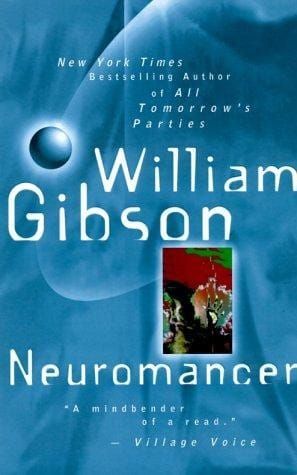
Started 8/19/26, finished 8/21/26
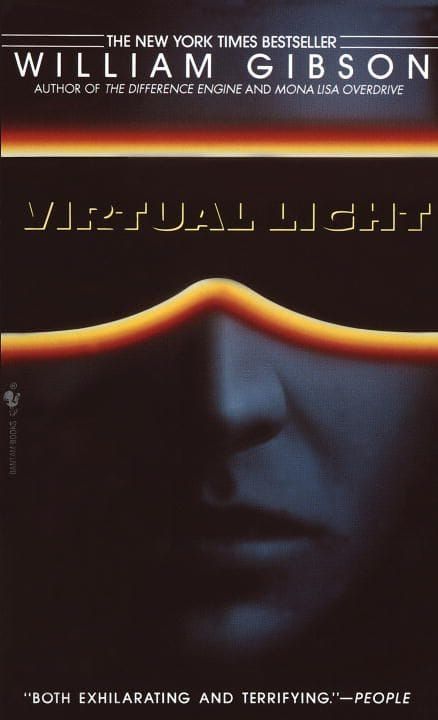
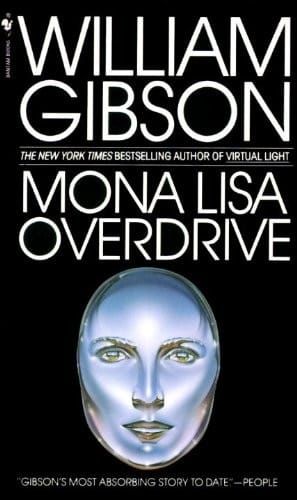
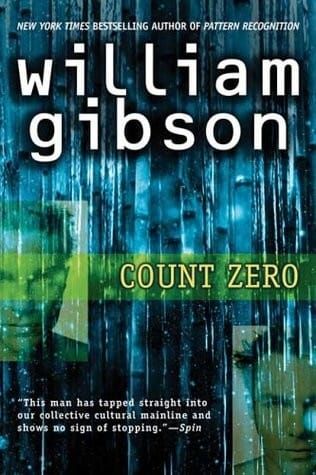
This is the first review in a planned series covering all of William Gibson’s fiction. The rest are going to have to wait until I read a few more Slow Horses books, though.
With the Apple TV adaptation of William Gibson’s Neuromancer coming out in January 2027, there’s been an uptick in interest in the novel, first published in 1984. I felt it was time to do my own re-read and first-time evaluation of Gibson’s work as well.
I don’t remember exactly when I read Neuromancer for the first time, but I think it was in 1985, after hearing about it at NorWesCon, the Seattle science fiction convention. Since then I’ve read it possibly a dozen times, and Gibson has become my favorite science fiction author.
Neuromancer is considered the foundational work of the cyberpunk movement, the group of writers who defined the subgenre of “high tech, low life.” Gibson didn’t invent the word cyberpunk, nor was Neuromancer the first cyberpunk story — Gibson himself had written several stories that hinted at what was to come (see his collection Burning Chromefor his short stories, including the excellent The Gernback Continuum). But it was his first novel-length work of cyberpunk, and it set the science fiction world on fire.
Cyberpunk as a subgenre didn’t really last that long. Neal Stephenson pretty much put the cap on the well in 1992 with Snow Crash, which satirized cyberpunk while giving the world a whole new set of concepts to chew on, including the Metaverse, ruined by Mark Zuckerberg’s failed attempt to make the whole world a virtual reality toy.
But in the mid-80s, the world of science fiction needed something new. The New Wave of the 1960s, inaugurated by Harlan Ellison’s anthology Dangerous Visions in 1967, had become old hat. The waves of feminist SF, environmental SF, and Afro-Futuristic SF were either just getting started or still to come. So popular was cyberpunk that it spawned other “punk” subgenres: steampunk, solarpunk, dieselpunk, hopepunk, and others.
But what is, or was, cyberpunk? It looked like Blade Runner, but it read like corporations taking the place of nations, the lowest levels of humanity finding new ways of getting by, and technologies barely imagined in the 1980s.
The story’s protagonist, Case, is a street hustler, formerly a “console cowboy,” a master computer hacker. He is recruited by the mysterious Armitage and teamed up with the street samurai Molly to bring about the merger of two artificial intelligences, Wintermute and Neuromancer.
To tell this story, Gibson invented the word “cyberspace,” then told us what it looked like, thereby giving us one of the most vivid metaphors of the world we live in today. Though he had no technical knowledge, he gave his readers the language they needed to describe the online world that sprang to life in the decades that followed the book’s publication.
Gibson has often said that science fiction is not a literature of prediction, but one of exploring the time in which it’s written. In Neuromancer’s world, the lower levels of society are more and more downtrodden, corporations are more important than governments, and entertainment has won out over education. Though he didn’t intend to predict, these trends he saw in the ‘80s continue to plague us 40 years later. For all he got right, he was wrong about the economic domination of Japan and the colonization of space, and he also completely (and famously) missed the advent of the cell phone.
The book also embodies two truths about technology: that everyday tech often starts off in the military, and that its growth is driven by unintended (and often unimagined) uses. As Gibson has famously said, the street finds its own uses for things. His fictional world’s “cyberdeck,” the primary hardware used to access cyberspace, got its start in the military, part of the operation that hatched the character Armitage, and is used as much for illegal ends as it is by legitimate operators.
And for all this, Gibson considers Neuromancer an optimistic story, because it depicts a world that wasn’t destroyed by nuclear war — a very real concern of its time.
I’ve seen readers of the book complain that it’s badly written, or they can’t understand Gibson’s style. I don’t pretend to agree with them. I find his prose terse, but also colorful, and I have no problem imagining what he describes or following the story. Gibson has definitely grown as a writer over the years, but he’s also the writer whose first novel gave us the greatest opening line in science fiction, one of the greatest in all of fiction: “The sky above the port was the color of television, tuned to a dead channel.” It doesn’t matter that a dead channel today looks different than a dead channel looked in 1982; fuzzy gray and knife-sharp blue are both sky colors.
Neuromancer has been called unfilmable, so we’ll see how Apple does next year. If you want to see an earlier example of Gibson on film check out 1995’s Johnny Mnemonic, though perhaps try to find the black and white version, which is closer to the vision of the director and Gibson, who wrote the original screenplay based on his short story of the same name.
As mentioned earlier, the best way to capture the feel of Neuromancer on film is to watch Blade Runner. The movie was released while Gibson was writing the book, and he was afraid his novel would be seen as a rip-off of the film. The British and American TV series Max Headroom shows heavy influence from early cyberpunk as well.